
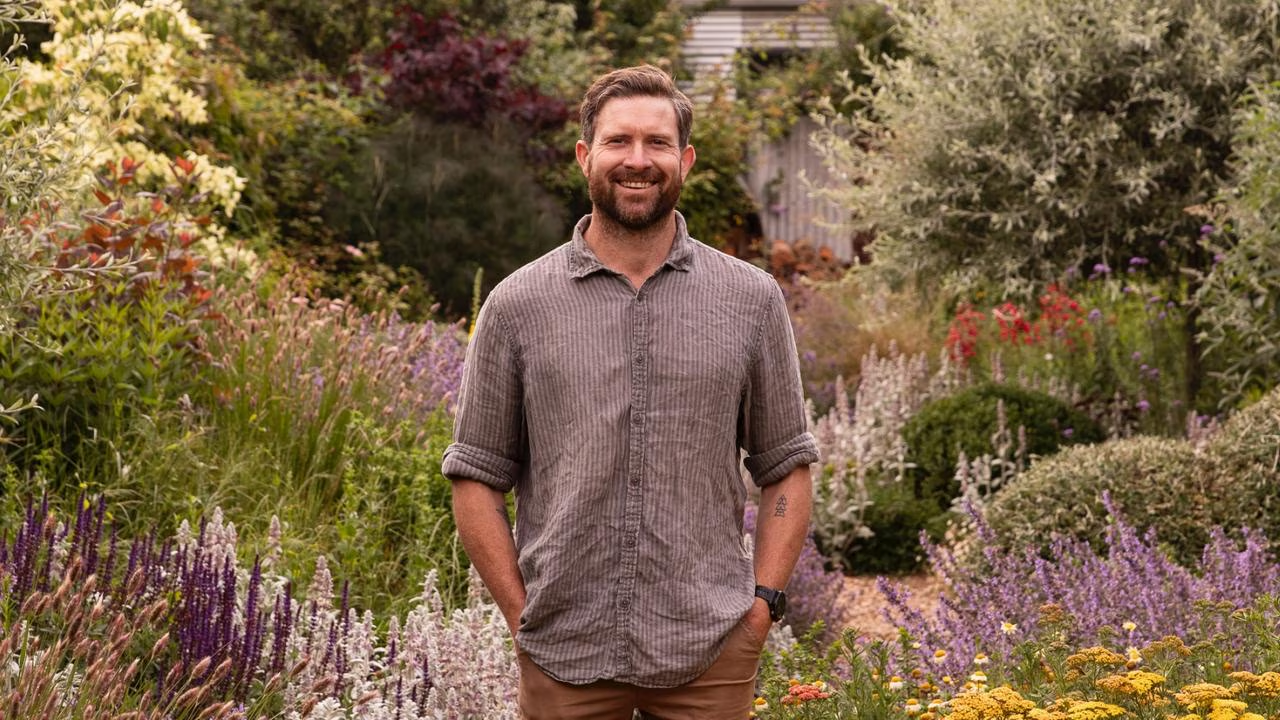
Jem Splitter is an Australian writer, director and producer whose work spans screen and theatre.
This is part of the Interviews with Creatives series, a curated library of conversations from the Creative Momentum with Meg podcast.
What if one of the most useful things you could do for your creative work was to stop trying to move it forward?
When I spoke with Jem Splitter, I was struck by how much of his creative process happens before the actual writing begins. Ideas can sit in his mind for weeks, months or even years. They take shape while Jem floats in a warm-water pool, reads, watches, wanders and lets different thoughts find their way towards one another.
One musical Jem is working on now spent around five years in that dreaming stage. Several separate ideas, each scribbled down as a single line, gradually revealed themselves to be part of the same thing. Jem wasn’t deliberately waiting for inspiration. He simply hadn’t yet recognised what the ideas were becoming.
It’s a useful reminder that an idea doesn’t necessarily arrive fully formed, ready to be turned into a finished piece of work. Sometimes we need to live with it before we understand it.
‘We need time to just f*ck around,’ Jem says.
It’s a wonderfully direct way of describing something that can be difficult to defend in a culture that values visible progress. Creative work already comes with its share of administration, planning, deadlines and decisions. Even when we’re deep in a project, it can be tempting to measure our progress by how many words we’ve written or how many tasks we’ve crossed off the list.
But the early stages of making something may require a different kind of attention. Jem talks about the value of being in a semi-dream state, when instinct has room to operate and the inner critic hasn’t yet started policing every possibility. The editor will have a job to do, but not necessarily at the beginning.
This isn’t an argument against structure or hard work. Jem knows the work involved in developing a story, especially when the plot has to carry an audience through a screenplay. It’s an argument for recognising that different stages of creative work ask different things of us.
There’s another kind of freedom in Jem’s story, too. His path into professional creative work wasn’t direct. After studying arts, he spent years doing other jobs while keeping creative projects going in the background. It took the disruption of COVID and the sudden end of a comfortable but unhappy office job to make a more serious commitment possible.
Looking back, Jem doesn’t pretend there is a simple formula for a creative career. He acknowledges the privilege involved in having the time to persist, and the fact that finding a path can be hard.
That honesty matters. We don’t all have the same circumstances, and determination can’t remove every obstacle. But neither should we assume that creative work belongs only to other people.
Listen or watch the podcast interview
Prefer to listen? This conversation first appeared on Creative Momentum with Meg. Listen below or continue reading the full transcript.

Perhaps the invitation in this conversation is to give our ideas a little more room, to recognise that not every stage of making something looks productive, and to keep looking for a way into the work that matters to us.
In this conversation, Jem and I talk about dreaming, plotting, creative careers and the trust a storyteller builds with an audience. I hope you’ll enjoy listening in.
In this interview we explore
Jem and I talk about the less visible parts of creative work, from the long period in which an idea takes shape to the decisions that help a story find its form.
- Why Jem’s creative career took a winding route from theatre to screen.
- What a lack of routine can offer creativity, even when it makes productivity harder.
- Why one musical spent around five years in the dreaming stage.
- How mind wandering can help ideas develop before the inner critic takes over.
- Why plotting is hard work, particularly when character and theme come first.
- How reading, misreading and daydreaming can spark original ideas.
- Why tone helps an audience trust a story, even when the story bends the rules of reality.
Read the full conversation below, or listen to the episode above.
Conversation with Jem Splitter
JS: I’m Jem Splitter. I’m a writer, director and producer. I mostly work in screen, and I come from a theatre background. So, yes, I do all three: write, direct and produce.
MD: Which one of those did you start with? Did you start in screenwriting?
JS: That depends on which phase of life you’re talking about. When I got into screen, I started as a writer. I only really started producing, like most writers do, because nobody else was going to produce my stuff, so I produced it anyway. Surprisingly enough, I turned out to really like producing, which I didn’t see coming. Before that, I was a performer on stage. Not a particularly good one, but mostly for fun. I’d do a bit of writing here and there, and then I found directing through all of that. It’s been quite a twisty journey. I’ve done all the jobs at various times.
MD: How did you get into writing from acting? Was it being on stage and reading lines and thinking, ‘I could do this’?
JS: It was a way to tell the story from the ground up, as opposed to coming in at the end. The other part of it is that acting was always a fun thing to do with my friends. We’d rehearse a play, get on stage and be silly. I didn’t really connect with acting creatively in the way that great actors do. I only really connected with it at that creative level when I started writing.
MD: I love the different pathways people take into what they do.
JS: And it’s always different, right?
MD: Absolutely. There’s no one pathway to anything. We all have to find our own wandering way into what we do. Did you go from school into acting, or did you have a professional career in some other way?
JS: When I left school, I wanted to be in the creative arts. I went to uni and did an arts degree, and nothing happened. I didn’t have the courage to really commit to it. I continued doing theatre for fun and making little projects with friends, including short films, but I didn’t have the courage to say, ‘I’m going to commit to this.’ I spent nearly 15 years, during and after uni, floating around doing various jobs. I’ve had a lot of different jobs. In the background, I was always doing something a little bit creative, but I was too fearful. It’s very vulnerable to announce to the world that you want to be a professional creative. It’s very scary. I didn’t have the guts to do it until COVID shut the world down.
The job I’d been doing for a number of years was a very comfortable, boring grown-up job in an office, in a small business. There was absolutely nothing interesting about it, but it was comfortable, so I stayed there for years and years, even though I wasn’t happy. Then COVID shut it down completely. It went to zero overnight, and I was so happy. I remember thinking that, with the whole world in a pandemic, I was really happy. I thought that was probably a sign that my life needed to change. I suddenly had all this time. I started writing and approached creative people to ask if they’d work with me. I really earnestly started giving it a go. During the COVID years, I managed to use that time to make some things, and slowly it grew into an actual career.
MD: I love that you tuned into that feeling and asked, ‘What is this trying to tell me?’
JS: I remember feeling really ashamed of myself for having such a good time in lockdown when everyone else was so unhappy, and fair enough. Obviously, getting sick and everything else was horrible and destructive. But I was happy because I didn’t have to drain my soul every day at a job I hated but tolerated. I was finally doing the thing I’d always felt I should be doing. I just hadn’t had the courage. The circumstances of the world made a door for me, and it was a matter of going through the door or not.
Creative Routine
MD: So you’re working full-time now as a writer, director and producer?
JS: Most of my time is actually spent producing these days. It tends to go in waves. I’ll be writing a lot and then producing a lot. I don’t spend much time directing, although I’m trying to grow that side of my practice. That comes at the end of projects, so it’s hard to get there. Most of my projects are self-driven. Before I can direct them, I’ve got to write them, fund them, produce them and then… So I spend much less time directing than writing or producing.
MD: Do you have a routine to your days?
JS: No, not at all. I’m completely routine-less, very ADHD. I would certainly benefit from routine, but I’ve never found one that works for me.
MD: Yet.
JS: Yet. Still working on it. But the lack of routine works for me in some ways, too. I have a lot of projects on at the moment, which is good and bad, but it means I’m very open to wherever my brain wants to take me. Which project does it want to work on today? Which stories am I going to have ideas about today? That works for me. It’s not fantastic for productivity, but it is good for creativity.
MD: I think that’s so important for creatives. We have to work with what we have, which is ourselves. We’re always a work in progress.
JS: And we need time to dream. We need time to just… Can I swear on this podcast?
MD: Yeah.
JS: We need time to just f*ck around. We need time to just do things and be open to what comes. I think if we’re always the pusher and the driver, particularly when we get stuck into the administrative work of navigating an arts career, that can be deadly for creativity. Even if you’re working purely in the creative space, in the middle of writing a novel or screenplay or whatever, always pushing forward leaves very little time to go blank and have moments of inspiration.
MD: We need that mind-wandering kind of state.
Creative Process
MD: Thinking about your creative work, do you have a process that takes you from the initial idea, that seed of the thing, to the finished screenplay or novel or whatever?
JS: I’d say it’s always looked different. Just like the question about routine, I’m quite unsatisfied by my lack of process. I think I’d really benefit from a system, but I haven’t found one that works for me yet. Every project I’ve done has looked really different. The one thing they almost all have in common is that the dreaming phase, the beginning of the idea, is very long.
Sometimes I’ll start typing relatively quickly. I’ll always make little notes if I have ideas. But most of the time, I really have to stew on it for weeks or months. The project I’m working on right now is a musical. I’ve never written a musical before, and I’m shit-scared of it. But I love the idea and the concept, and I love working on it. That idea marinated in my brain for easily five years before I started actually writing it. And that wasn’t an active choice. I wasn’t deliberately waiting until it was ready.
It was one of those things where I’d scribbled down five or six different ideas, each with a one-line description. Over five or so years, I realised they were all part of the same whole. It just took that long for me to think, ‘Oh, this is the thing I’m writing.’ It took that long to understand what I was looking at. Five years of dreaming before the writing even started.
That’s the longest it’s ever taken, but it usually takes quite a long time. The place I go to dream is the public pool, the council pool. I love a public pool. I love any public service, libraries and pools.
MD: I know. How good is it?
JS: I go to the warm-water pool and lie on pool noodles, floating with my eyes closed. Whatever comes into my mind comes into my mind. That’s where I come up with a lot of my ideas. I could be lying there for two hours, and occasionally a lifeguard will tap me on the shoulder to check that I’m still alive.
‘Are you still alive?’
‘I’m still alive. I’m just dreaming. Leave me alone.’ You’ve broken the dream!
MD: I love that so much. It’s a reminder to us all as creatives that the dream state is important, and it’s not something we can hurry. Sometimes that might take five years, and sometimes it might take a very short amount of time.
JS: I wrote a short film a few weeks ago that I thought about for about two hours. I naively believed I’d pre-written the whole thing in my mind in those two hours. Then I went to put it into Final Draft, and it took a bit longer than that. But it came together very quickly compared with most things I’ve written. I wrote it in about a week.
MD: Once you’ve had that dream and know what it is, do you plot it out or just start writing?
JS: I’m a plotter, for sure. Plot is the thing I struggle with the most. I usually have a very strong idea of character and theme. I know what the thing is about. I know the juice of it, although that changes and develops over time. That’s generally my starting point. The plot is very hard work for me. Every time I make a plot decision, I feel like I’ve seen it a hundred thousand times before. Or I feel like it’s betraying the theme, or the characters wouldn’t do this. That’s the hardest work. But if I didn’t do that, if I just sat down and started writing, there wouldn’t be a plot. It would be characters in a room talking to each other, which I love to write, but nobody loves to watch.
MD: From what I’ve heard from screenwriters, it’s so important to spend a lot of time on the plot.
JS: If you don’t need to do that, my hat’s off to you. There are genres where you don’t need to. There are the mumbly indie movies where there isn’t a lot of plot, and I like some of those. But I tend to write quite a bit of science fiction and genre stuff, and a lot of comedy. You’ve got to keep the plot moving, or people get very bored and dissatisfied. I don’t have the choice.
Creative Inspiration
MD: Where do you draw inspiration from for your writing?
JS: Everywhere I can. The people around me, the things I watch and read. Reading is great because you have to do so much of the work yourself. If you read something and interpret it and get ideas from it, it will still be quite original to you because you’ve had to take the words on the page and reinterpret and reimagine them. It’s a bit more dangerous to take a lot of inspiration from other screen work because it’s so literal. It’s right in front of you, so you can crib it easily. I’ve had a lot of ideas I really enjoy come out of reading something. I’ve also had ideas come out of misreading something.
I’m a very inattentive reader, so I can get carried away or drift away, realise I’ve misread something and imagined something that wasn’t even there. Then I think, ‘Oh great, I can use that now, because I’m not stealing anything from anybody.’ It came from my own brain.
MD: I love that, because I always read before going to sleep. Sometimes I need to turn the light out when I’ve started writing the rest of the story in my head.
JS: Right, you’re auto-completing.
MD: Yes! I’m thinking, ‘Your eyes are shut, Meg. You’re actually making the story up now. It’s time to turn the light out.’
JS: But what ideas are you coming up with in that time? You might be coming up with some gold.
MD: Maybe I need to write those down, because I’m thinking, ‘No, that’s literally not happening. You’ve gone off the page.’
JS: That state is very valuable as a creative. I’m not great at getting into it either, but I’m working on it. I think it’s so valuable because it’s pure instinct. There’s no critic in that moment. There’s no inner critic and no plot police. The editor hasn’t kicked in. And the editor is your enemy when you’re in that creative space. You do need to be able to edit, but when you’re creating something at the beginning, you just need to dream.
Being in that semi-dream state, where everything is instinct, is very valuable. Even if what you come out with is nonsense, there might be something in there that your brain thought was important. Nobody really wants you to transcribe a dream directly onto the screen. Maybe if you’re David Lynch, you can put your dreams on screen and people will love it. For most of us, it would be boring nonsense. But if you can pick up on something in that instinctive space and live with it for a little bit, it can be really valuable.
MD: I love that. I’m going to put a note next to my bed and see if I can summon the energy to lift a pen. I’ve written notes to myself that I can’t read in the morning.
JS: I’ve got the same thing. I have a text thread with myself because it seemed like the easiest thing to do. I just text myself whatever’s in my mind. Most of the time, I get up the next day and think, ‘What was I on about?’
Filling The Creativity Cup
MD: How do you refill your creative cup?
JS: Floating in a warm-water pool. I need sun. I go very sad in the winter months. Walks, the beach. I like the feeling of sand. And then social time. My cup is filled mostly by time spent with the people I want to spend time with. That’s the number one. It can be a distraction as well, but it’s a pretty good distraction, so I don’t mind.
MD: I think social time is so important for us as creators. We can get a bit stuck on our own little island, floating along.
JS: I sometimes meet people who are impressed that I’m a professional creative. They think it’s very glamorous. I’ve got to tell them, ‘You realise I spend most of my job at my desk in my pyjamas?’ With made-up people, staring at a little screen. It’s occasionally not very different from being a professional looker at Instagram. We definitely need that social refilling. At least I do.
MD: Watch a writer work and you’d wonder what they were actually doing.
JS: And what are they Googling? What’s their Google history? Jesus.
MD: All the crime writers out there are probably on some watch list.
JS: My search history at the moment isn’t particularly scandalous. I’ve been in a dream state about a new story. I’ve just been idly dreaming, and I’ve got a few ideas that I don’t know how to combine. It’s sort of a historical fantasy comedy. I’ve been looking up swords and armour to pick a period, because I’ve got the vibes in my mind. Now I just have to make sure it actually aligns with history at some point.
MD: History is so interesting to research. I think it makes writing harder because you’ve got to get it right. Once someone is reading or watching, they’re thinking, ‘Hang on, what are they doing?’ Unless it’s really clear that it’s a mash-up.
JS: It depends on the time. I find tone is really important for that stuff. Conversations about suspension of disbelief often neglect tone, but tone will dictate whether your audience goes along with you. Take The Princess Bride, one of the great fantasies. It has such a specific tone that you allow anything. It’s pretending to be semi-historical, with these real countries in an unspecified time period. There’s a pretence that you’re supposed to believe it happened in the real world. But you never actually have to believe that, because it’s so funny and odd and distinct. You never stop and think, ‘Hang on, I thought Florin was a real country. How come we can suddenly resurrect this guy from the dead?’ Suspension of disbelief is interesting because people can get bogged down in the details when, more often than not, I think it’s a question of tone.
MD: I agree. The reader or watcher needs to think, ‘Yes, I trust this, but I’m just going to go along with it.’ We have to build that trust as creatives.
JS: If you establish the tone up front, you don’t necessarily need to explain everything. You can do it through your writerly voice, the character’s dialogue or other choices. If you tell the audience tonally that this isn’t a super-serious work of historical documentary realism, they’ll trust you. They’ll think, ‘Okay, I’m on board. I’m listening to a story, watching a story, reading a story.’ But if you present yourself very seriously, like a documentarian, the standard for realism is really high. Otherwise, you’ll lose your reader.
MD: That needs to be set up right at the beginning, doesn’t it?
JS: I really don’t like not knowing what I’m reading or watching. I like to have a strong sense of tone very early. I want to be surprised by plot and character choices. I don’t want to see what’s coming, but I want to feel tonally confident and trust the storyteller. I’m pretty trusting. If a storyteller makes strong tonal choices, I’m on board. I’ll give myself over to it. But if the choices aren’t strong, if it’s a mishmash, or if the storyteller is withholding things early on, I start wondering, ‘What tone is this? Are they being mysterious on purpose?’ That’s when people lose me. I think it’s helpful to the audience to make strong tonal choices very early.
MD: I’m thinking about that television series The Great. Is it Catherine the Great?
JS: Oh, The Great. Yeah.
MD: Yes, The Great. We knew it wasn’t historically factual. It had humour, they were going to ham it up, and it was a bit ridiculous.
JS: That’s a perfect example. The tonal choices were so strong that it was obvious even in the trailers and promotional material. You knew what you were in for. That let you go along with the story. You just handed yourself over to it. I don’t think too many people were watching The Great and bitterly complaining about historical inaccuracies, because you’d already given yourself to the show.
MD: Absolutely. I love that show for all of that. It was surprising, but we knew we were in for that surprise. We knew we were in for a ridiculous romp and ride. We were learning a little bit, but really it was about entertainment and having fun.
Creative Wisdom
MD: Tell me, Jem, if you were chatting with someone who was thinking about dipping their toe into a creative pursuit but didn’t think they were allowed to, or someone who felt stuck and didn’t know what to do next, what wisdom would you want to share with them?
JS: I’d think about what I needed to hear, because everybody needs to hear something different. I can’t speak for everybody, but what I needed to hear was that, as hard as it is, there is a path for everyone. If you want it enough, if you try long and hard enough, if you’re smart enough and keep working at it. The longer I’ve been doing this, the more I’ve thought that the difference between a successful creative and an unsuccessful creative is determination and sticking power.
There is a certain amount of privilege in saying that. Some people don’t have the ability to devote the time it takes. But if you can and you do, then you keep sticking with it until something works. You need to be creative and brave, and willing to do the parts of the job you don’t particularly want to do. There is a path for you. It’s too easy to look at the idea of an artistic career and think, ‘That’s for other people. That’s not for me.’ But it is for you if you can stick with it long enough and hard enough.
MD: Determination is so important. It’s easy to give up at the first rejection or the first moment of thinking, ‘I don’t know if this is working.’ But if you stick at it, with time, effort and talent…
JS: And there’s no shame in giving up, honestly. I gave up for 15 years, but that’s what I needed to do at the time. I don’t have too many regrets. Sometimes I spend a lot of energy wishing I’d had the guts a bit earlier, but I racked up a lot of life experience in that time that I now write about. It went the way it had to go. There’s nothing wrong with giving up. But if you want it enough, don’t refrain from having a go because you think it’s for other people. It is for you. There is a path for you. It’s just really hard to find.
Home for Creativity
MD: Tell me, what feels like home for you and your creative work?
JS: Being in the rehearsal room with actors, directing actors. I’m never happier. I’m never happier. It is absolutely where I come alive.
MD: Excellent. Thank you so much for coming on the podcast, Jem.
JS: No worries. Thanks for having me, Meg. It’s been really, really nice.
MD: There’ll be ways for people to find you in the show notes, so if you’re listening, pop into the show notes and find Jem and Jem’s work. Thank you for listening.
JS: I’ve got a web series on YouTube called Displaced I’d love you to watch.
Connect with Jem
Jem is an emerging screenwriter, director, and producer; specialising in genre television with a unique voice and sharp, character-based humour. Most recently, Jem’s original sci-fi/comedy series DISPLACED, funded by Screen Australia and VicScreen, has racked up awards and accolades at seven film festivals over three continents and has been watched online over 300,000 times.
- Instagram @jemonmeringue
- Displaced webseries
- Watch Displaced
More interviews with creatives




Enjoyed this conversation?
If this story inspired you, encouraged your own creative practice, or gave you something to think about, I’d love you to share this interview with another writer or creative.
Creative Momentum with Meg, a podcast of conversations with creatives
This interview originally appeared on the Creative Momentum with Meg podcast, where I talk with writers and creatives about how and why they do their creative work.
Explore more conversations about creative process, inspiration, routines, challenges and the many different ways people bring their ideas to life.

S2E31: Jem Splitter, screenwriter, director and producer who lets ideas take their time – Creative Momentum with Meg
Listen or watch Creative Momentum with Meg
Want to be part of the Home Season?
I’m always looking for Australian creatives of all kinds to share their stories. If you’d like to be considered for a future interview, register your interest.
Looking for support with your own creative work?
Momentum is where writers and creatives come together to build consistent creative habits, find encouragement and keep moving their projects forward.