Sydney author Samantha Lee on building a 5am writing practice around young children, following curiosity into fiction, and why simply turning up is often the difference between writing a book and only dreaming about one.
This is part of the Interviews with Creatives series, a curated library of conversations from the Creative Momentum with Meg podcast.
Samantha W.L. Lee on curiosity, consistency and writing Bound before sunrise
Listen or watch the podcast interview
Prefer to listen? This conversation first appeared on Creative Momentum with Meg. Listen below or continue reading the full transcript.
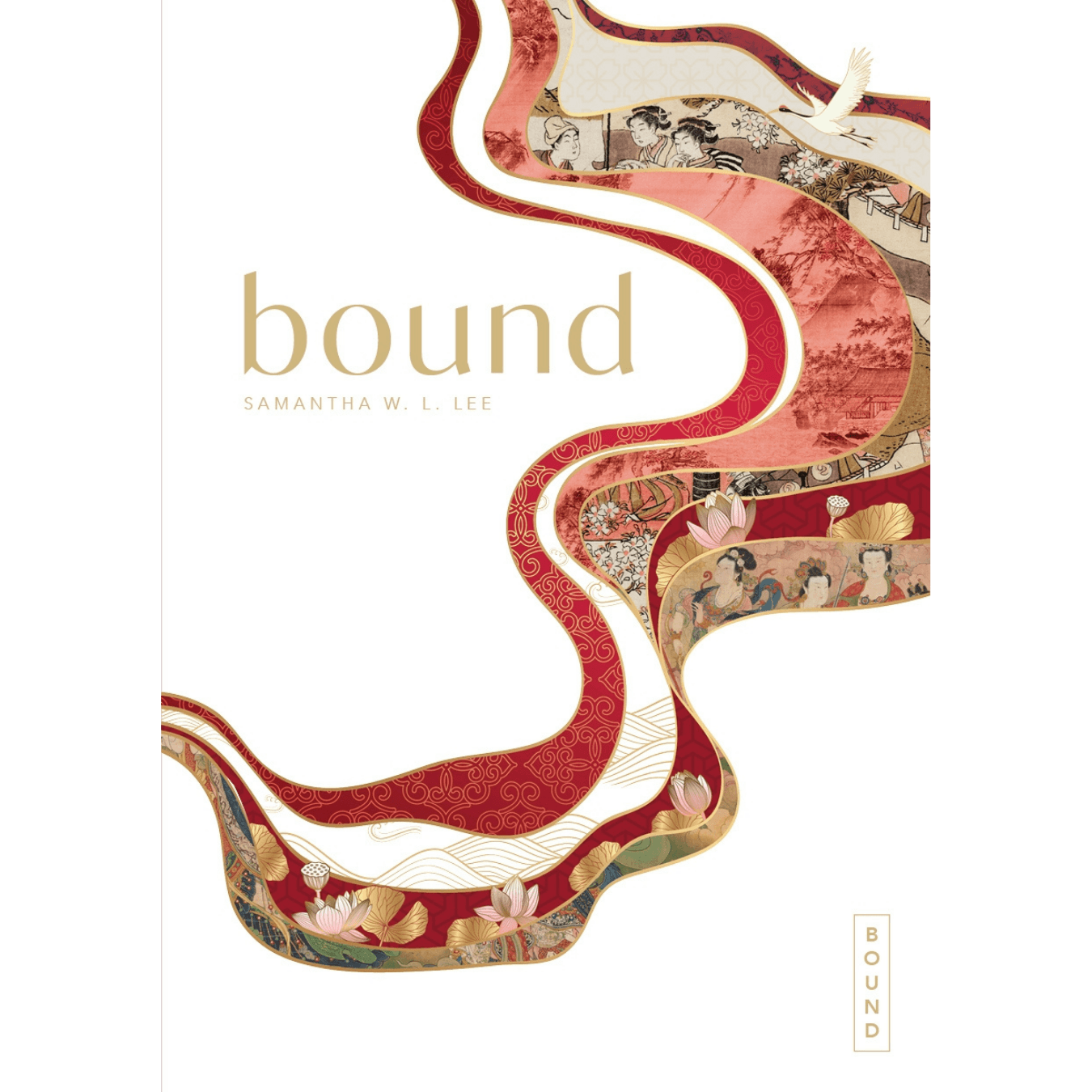
Many writers spend years waiting until life becomes less busy before giving themselves permission to write. Samantha Lee chose a different path. An English teacher turned novelist, Samantha built a writing practice around the only time she could reliably find: 5am, before the rest of the house woke. That early morning routine became the foundation for her debut novel, Bound.
In this conversation we talk about writing consistently through changing seasons of life, following curiosity wherever it leads, and learning to trust that creative ideas often arrive while we’re doing something entirely different.

One sentence has stayed with me since we recorded this conversation:
I think the difference between getting published and not … is that you just keep turning up.
There’s something beautifully simple about this that is a great reminder for all of us.
Not perfection or talent. Just returning to the work.
Whether you’re trying to build a writing habit, wondering if your creative process is working, or juggling your writing alongside work and family, Samantha offers gentle encouragement that small, consistent moments really do add up.I suspect many writers will recognise themselves in that distinction.
In this interview we explore
- Building a 5am writing practice around work and young children
- Why curiosity sits at the heart of every story she writes
- The difference between plotting and “pantsing”
- How teaching English shaped her understanding of creativity
- Trusting your brain to solve problems away from the desk
- Why galleries, books and films continually refill her creative cup
Read the full conversation below, or listen to the episode above.
Conversation with author Samantha W.L. Lee
SL: My name is Samantha W.L. Lee. I am a writer. My debut novel, Bound, came out at the start of March. That’s been my main art form and I also write poetry and essays
MD: How long have you been a writer for?
SL: A bit over 10 years and it’s something that as a child I always wanted to do it, but it’s just something that I thought that’s not a job you can actually do.
MD: That sounds familiar.
SL: Yeah, and you need to not think about it as a job either is the other thing because realistically it’s very hard to make money from your writing anyway. But I think even that confidence to have it as a hobby, to say, oh, I’m a writer, is, you know, that’s a huge step. When I first started writing Bound, it was because I’m an English teacher by trade. it was my very first year teaching extension to English and they have to write about a 5,000 word major work, a short story. I was thinking, how can I expect my students to write a 5,000 word story when I actually have not done that myself and I can’t do that? So that’s what got me going, OK, I need to actually write as opposed to think about it.
MD: Oh, I love that way into writing as well. I’ve done a lot of workshops. It’s easy to sit there and teach it, but can you do it yourself?
SL: I’d be setting all these tasks and I’m like, actually, is this a good task? I don’t know. This could be terrible.
Creative Routine:
MD: Can you tell me what your routine is? Are you still teaching? Are you writing full time?
SL: OK, so great questions. I’m not technically teaching right now. I do bits and pieces of other things. It’s a long story with what’s happened to my career but now I consult rather than actually teach, which is really quite nice for me. As well as that, I have picked up things like since I become an author, like running writer workshops, which has been amazing. I absolutely love that because I feel like I’ve still got one foot in the classroom. But as well as that, a bit more creative space. Teaching is a different story, but I think that that had come to an end. You know, it might be something I go back to, but who knows?
At the moment with my writing, the whole idea is that I start at 5 am every day. This was something that I started a decade ago while I was teaching because that was the only time I had to write. Since then I’ve had children so you think you’ve got from 5 am, but they could wake up at 4.30 and in which case you don’t have that time to write. So I try to wake up at 5, but I guess I’m not as strict with myself. Since then I’ve given myself a lot of grace and obviously sometimes it’s more important for me to do that but other times it’s like, well, you haven’t had a full night’s sleep. You need to prioritise that sometimes.
But ideally, I’m up most mornings at 5 am writing and then I go until the kids get up and get them all ready. I don’t really have time during the day to write, unfortunately. That was the whole idea when I started this year. I was like, I’ll have a whole day to write. Well, even last year I was thinking that but I’ve ended up picking up more work here and there. I’ve got two days of work that has been pretty consistent because I’ve just kept getting more work, which is wonderful but it does make it hard because I’m also trying to engage with the creative processI feel like I need to be like tapping in every single day for it to actually to feel connected to my writing.
MD: So are you finding now that you aren’t able to tap into it every day?
SL: So I guess with time restrictions I haven’t been able to tap into it every single day. My realistic goal is at least three times a week. A stretch goal is probably every single day, but probably a realistic stretch goal is five days a week. And, you know, that’s doable most weeks.
MD: All the mums out there are just like nodding their heads.
SL: My kids are still fairly young, so I’m hoping that as I get older and more independent and maybe when I’m doing the drop off to sport, I can sit in the car as opposed to standing there chasing around my toddler and trying to watch my child. Hopefully I can sit in the car and do some writing.
MD: Well, it’s all the seasons. You know, it’s constantly changing and that’s what makes life interesting.
MD: Tell me, do you have a process to go from the seed of an idea to getting that complete body of work?
SL: Yeah. I think that like a lot of the times I start with a concept and it’s interesting because that’s from teaching English. It’s always like, what’s your concept? It’s funny, though, because I feel like most writers actually don’t generally start with that. So, I’ve got this big idea and I’m like, OK, well, how am I going to show this through a narrative or through an essay or through a poem? And that’s how I start.
Now, in terms of my novel, I had a very clear picture of the start and the end. I didn’t really know how I was going to get there. Keep in mind, it actually evolved into a novel. Originally, it was just going to be a short story and then it was going to be a series of short stories from different generations all weaved together, but instead it ended up being this one continuous thing because I couldn’t let it go. Kathryn Heyman describes it as having a clothing line with pegs of where you want to get to. It doesn’t really matter how you get there. You just get to the pegs. Then I had a clear idea of how I wanted to finish and it ended up there, but I took a really windy route to get there. And with that, certainly, the pegs definitely change and rearrange themselves and need to be taken off at times and put back on in a different form. There was a lot of that. I guess I’m a bit of a pantser. I would love to be a plotter and I keep saying this time I’m going to plot, but I just my mind doesn’t work that way. I really wanted to because I feel like it takes me a lot more revisions to get to that final product. The structural edit in my novel needed such a heavy structural edit because it was just me wandering around on a page.
MD: I’m nodding strongly because I’m that pantser too. And II wish I could plot more because I think it would take a lot less drafts. It’s not the way my brain works.
SL: That’s right. Also there was some times where I didn’t know what was going to happen and the characters wrote it for me and that’s a wonderful feeling. I love to taste that feeling in a way. My mind loves to follow them and see where it takes me, like there’s something so much fun about creating a world and chasing that story. I think that’s why we stay pantsing because honestly, that’s what we all love.
MD: When that character is talking to you and takes you down a path that you didn’t even know existed. So, plotters? How do they do that?
SL: Also like what’s with the spreadsheets? I don’t understand.
MD: I’m a spreadsheeter, but I’m a pantser spreadsheeter.
SL: That’s probably a good idea. Maybe that’s what I need to move forward. But I don’t know. I can’t do the numbers of it. I can’t do the math like: at this point, 75 percent in this needs to happen. I’m like, what do you mean? How do you figure that out?
MD: I also love the idea of the line with the pegs on it. One of the manuscripts I’ve written, I had what I called my skeleton and I had to build the flesh around it.
MD: Can you tell me what inspires your creative work? Is it from the world around you, from people, from writers? Where do you get your inspiration?
SL: Yeah, I think I get it mostly from the world around me. For instance, Bound was very much inspired by it was a story that my mother told me about an auntie in her village in Malaysia. Keep in mind, they call everyone auntie and uncle, so it wasn’t a blood relation. It was a story of a woman who had her feet bound from then the laws in China. Then the laws changed and her feet were unbound at the last moment. And she was the first woman in her family to have unbound feet. I was like, what do you mean, Mum? I had to keep following this story. I was like, please, I need the pieces of this story and I need to put it together myself if you’re not going to tell me. A lot of it was fictionalised and some of my mother’s stories. My mother also had these really captivating stories of her childhood, often traumatic. But, for me, it was also about finding out a truth to it as well, I think, even though it’s fictionalised. We have these images of people in our family’s lives that are people who I didn’t necessarily know that well. And I go, well, you cannot tell me that they were just a bad person, what was it that made them that way? For me, it’s always about curiosity.
I’m like, but why? But why? But why?
That’s why I write. So that was with my novel. My poems are about motherhood. It was about being a woman of colour and a mother, because unfortunately, in the stories of motherhood, a lot of the time it’s a very white perspective of motherhood. And it’s also really idealised. Part of me was like, wait, it’s so idealised that I can’t ever look like what’s presented as the ideal mother. So that was going through my mind on top of the actual struggles of motherhood as well. That was the intersection of motherhood and all of that. That’s how I got into poetry.
With the essay that I wrote that got published, the English syllabus changed and I had to write in different forms and I thought, I need to get my head around this so I’m just going to write this. It’s actually about power dynamics. I originally wanted it to be called Don’t Yuck My Yum, but they didn’t like that title. It’s called ‘How it feels when someone scrunches up their face at Chinese food’. It’s very much about if you can scrunch up your face at certain foods, that means that there’s some sort of power dynamics that some cultural foods are seen as lesser than others to do with colonial perspectives and all the rest. So that was where that was going and it became this angry rant. I guess I had all these things that I’ve been thinking about the world and feelings I didn’t even realise that I had. It was originally meant to be discursive and discussion, but it just became more persuasive as I kept going. It sits somewhere between there and I told that story how as a child, people would scrunch up their face when they saw your lunchbox. That’s like that’s something that stays with you. I’m talking about the smells of lunches and things, which, by the way, my food was delicious, but it made me not want that food, sadly. that’s something that really stayed with me. I think that’s also how I guess it got too deep with that.
So, it’s a lot of the things around me. My next book is a satire on the education system. It is very much what’s happening in my world and what’s around me. I guess, again, I think some of that has been a student has turned into this as an adult. Like what made them do that?
MD: I love all of that. I just want to run out and grab all your written work and read it.
SL: You’re beautiful. Thank you.
MD: I’m curious about going from teaching, teaching English to then writing for yourself. What have you drawn on from your career as a teacher, as an English teacher to take into your creative work?
SL: Yeah, really good question. No one’s actually asked me that so thank you. I think it’s interesting because I think it’s almost gone the other way, because it almost made me realise how much we limit creativity within an education setting. Sadly, we are teaching to a very specific criteria and it has to match that. At first, I think my writing really fell into that, but then I was like, wait, this is just writing because that’s what I was taught. So it made me explore what else is out there. Things like, how do we make voice more interesting that’s not just in this way that is very valued within one particular industry way? How do we branch out of that and expand on that? It’s been good for that reason. I think that I had to break free from that because at first I couldn’t help but think back to a marking criteria, sadly. It did make me quite sad for teaching as well, because that’s what we’re all doing. We are all, unfortunately, judged. I ran a faculty for almost a decade and you are judged on your HSC results and that’s unfortunately how you have to teach. It’s sad that I feel like as well as. Once I started writing, I started to become more aware of making the point when we’re marking, that doesn’t mean that you’ve got bad writing. It just means that it’s not necessarily for this particular criteria. You could actually go and write a bestseller and it might not match this criteria and that’s absolutely fine but you need to think about your audience for this particular piece of writing. Think about your audience.
MD? So you’re thinking about your audience when you’re writing?
SL: A little bit now, I think. Also now, I think that the freedom with a first novel is you don’t think it’s ever going to get published. I think the first novel is very special because you do have that creative freedom that you don’t need to think about the audience but I find myself much more aware of that now. I became a lot more aware of it. Once you sign the contract and you’re editing it and you’re like, oh, my gosh, what if this comes across as not what how I intended? I’m very conscious of that. I didn’t want to perpetuate stereotypes of Chinese culture and my story starts with a horrific foot binding scene. In my head, I was like, oh, my gosh, I’m perpetuating the stereotypes of the barbaric nature of the East, all of that, and that made me panic. So unfortunately, that did make me a lot more conscious of the audience.
But now I think of it more in terms of who do I actually want to read this? With my satire, I want this to be quite valued among certain groups. So that’s more what I’m thinking, if that makes sense, whereas I was writing just complete freedom with Bound. I wasn’t necessarily thinking about audience because that was just like a pleasure project that I thought would never see the light of day.
MD: And has that made it easier or harder in writing the second book?
SL: Good question. I think that it’s hard because I’m really in the early stages. I think in some ways a little bit easier. I think it’s easier to plan the full picture, which is nice for me because I’m not a planner. But in terms of the actual writing itself, I don’t think it’s made much of a difference as yet. But I’m still in the first five thousand words. So we’re getting there.
MD: Well done on getting cracking with the next one. I know a lot of people find it much harder once they have one book out. Suddenly you are thinking about audience.
SL: And it’s a different pressure. Not completely. Just in terms of my mind at the moment, I’m very much like pushing the book that I wrote that I’m not focusing on in my writing and I keep getting drawn back into Bound, which I love. But it’s very hard to move on creatively when you’re still talking about your last book.
MD: Between the two, did you get playful with some poetry or are there other things that helped you create that separation?
SL: That’s a good point. I probably should have done that. I didn’t do that because I think that I’ve been working on Bound for so long, a decade, and interestingly, like the poetry, the essays came up when I got to sticking points in my novel. So when needed a break, I’m like, let’s do some of this. Oh, I’m so into parenting. I need to write about it. And then I feel like I’m being creative in the publicity for my book. Constantly thinking about how can I create engaging posts, that kind of thing. I feel like that’s almost been a bit of a break. And I guess there was a break in writing during that time as well, because I just was so busy and I couldn’t and my daughter decided to not sleep through the night at that point as well. So that’s great.
MD: What wisdom would you want to share with someone thinking about dipping their toe into creative writing, maybe you’ve got your English teacher hat on or not, or maybe with a novelist or someone who’s at a stuck point with their creative work?
SL: Keep turning up. That’s all it takes. The difference between getting published and not is potentially that you’re just consistent with it and that you can keep going and you don’t stop and turn around.
I’d say take a break, if you’re stuck on something. Take a break. Maybe write something else, focus on a different scene. I feel like sometimes it’s the things like the liminal time in a way. You go on a run or you’re in the shower or you’re cooking dinner and then all of a sudden that idea comes. Sometimes it comes when you’re writing another scene as well. I feel like our brains are very powerful and they work on things when we don’t even realise it and it’s pretty cool when you get that aha moment. I certainly did with my novel when I was just like, I just need to tie it together more. I don’t even remember when or how that actually that aha moment came but certainly it was something that I had been thinking about nonstop and I was in the process of editing a different part of the novel. I think just thinking about the overall themes within your novel probably gets you to that point maybe. The other thing is that interestingly with the aha moment for me, a scene that I ended up putting in, I didn’t realise that I’d actually foreshadowed it the whole time from the very first draft, which is crazy. And I was like, how did I not think of this? I’ve hinted it the whole way through and maybe that was why I realised it because I read a bit earlier and I’d seen it.
I think your brain works in mysterious ways and sometimes you need to let it breathe. And sometimes working on a different part that gets you thinking about it without even realising it.
MD: I love that so much. It’s almost like the trust, trust the process, trust the brain.
MD: How do you fill your creative cup?
SL: When I’m stuck, things that always help and I don’t have much time for it now with kids, are going to art galleries, watching incredible films or reading incredible books. They often stimulate these ideas. Art galleries, in particular, I think it’s about going to that physical space as well. It’s one of those things that with a movie, I find I’m on my phone constantly or when I’m reading a book I’m in and out of it. But when you’re in a gallery, I don’t know what it is, but I just pay attention and focus. Often, I’ve had ideas for short stories in galleries.
I’ve had ideas for parts of my novel in galleries and things like that. And even setting, sometimes just looking at a picture, I can go, oh, I need to describe this. Sometimes it’s journaling those little bits of description. They’re not necessarily for a longer piece, but it’s about keeping creative, keeping that mind active. Taking a break makes it much harder to come back to so often that inspiration, going to a gallery, watching something incredible and reflecting on it fills the creative cup back up. You don’t even need to do that creative bit that comes with it. I probably should go back to this. I used to journal about every single thing that I’ve read and seen and reflect on it and think about what ideas could come out of it so I could just flick back to this journal and I’d have post-it notes for all the ideas that I had. If I was stuck, I could go back to one of those ideas.
MD: That sounds like an amazing thing to do. This makes me want to go out and start doing that immediately because I do reflect on every book I read, but not always on the other things.
SL: And ideas really come from that. It was wonderful. I probably could go back now and still be like, oh, I’ve got all these other ideas that I forgot about. As well as that, often we have ideas that are so fleeting. You think about it when you’re reading, watching in a gallery, but you never pick it up again because it’s gone within moments.
MD: Tell me, what does home feel like for you and your creative work?
SL: Gosh, home. Sadly, in front of my laptop. I think 5 am in front of my laptop on my sofa with a matcha latte. I feel like you need these prompts to get you there straight away. And it becomes like the training. As soon as I smell it, it’s time to write. As soon as I’m sitting in that spot in that corner, I’ve got the blind up so that I can look out and see the sunrise at some point so I’ve got a sense of time as well. But for me, as I said, it’s fun in front of the computer, which is depressing, but I feel so at peace and at home in front of the computer at 5 am with my matcha latte on the green sofa by the window. There’s something that’s so sensually fulfilling about that as well that just takes me where I need to be when I write.
MD: I love that so much because there’s a habit stacking that’s happening in your brain that means that when you do those things, you’ve created a ritual so your brain knows exactly what it needs to do when you’re sitting on the couch at that time of day with your matcha latte and your laptop. And your brain’s like, great, we’re here to write.
SL: Yes. I didn’t even realise I was doing it until I was thinking about it the other day and I was like, oh, hang on, this is like it’s been built into me for years. Also I can’t sit on my couch in that same spot and focus on something else on the computer at a different time of the day. I think that’s why my writing is so good at that time. I actually do find it very hard to create extra writing blocks but when I’ve got time, it’s much harder to get in the zone for me. So my matcha latte.
MD: Does this mean that it’s hard for you to write in other places as well?
SL: I think that’s a good question because it also depends on what part of the writing that I’m doing. I feel like the editing process, I shouldn’t be on the couch. There are a couple of things I do. One of them is like the tactile, getting out the palm cards and shuffling things around, which I love. When I’m reading it in terms of like I like to read a hard copy as well.
So that can be on the couch. That can be fine. But I think that when I’m actually putting things into movement, for some reason, I like to be like at a table. It can be my kitchen bench and it can be my study, which is a complete mess. And I never use it for that reason because it’s chaotic, like my mind. But I do think that the different stages changes where I need to be in terms of writing in a cafe. I used to do that, but I just it’s I think that’s just like one more sticking point to get me out, especially with kids, it just feels like it’s one more thing to do to get there. And then I’ll get distracted by that and I forget where to park, all of that. It’s just too much, too many steps to get there.
MD: And I love that you are coming at it before anything else in the world has touched you at 5 am. I still remember when my three boys were young and I don’t think I don’t think any of them slept past 5.30.
SL: I’m lucky mine sleep. I have to wake them generally to get them going for daycare and school. So that’s quite nice. If they suddenly change their sleeping patterns, though, I don’t know what I’d do.
Connect with Samantha W.L. Lee
More Interviews with Creatives




Enjoyed this conversation?
If this story inspired you, encouraged your own creative practice, or gave you something to think about, I’d love you to share this interview with another writer or creative.
Creative Momentum with Meg, a podcast of conversations with creatives
This interview originally appeared on the Creative Momentum with Meg podcast, where I talk with writers and creatives about how and why they do their creative work.
Explore more conversations about creative process, inspiration, routines, challenges and the many different ways people bring their ideas to life.

S2E28: Ingrid J. Adams, author and the importance of finding your own way – Creative Momentum with Meg
- S2E28: Ingrid J. Adams, author and the importance of finding your own way
- S2E27: Claire Zorn, author, artist and enthusiastic maker
- S2E26: Elizabeth Barnett on painting, writing and finding home in creative work
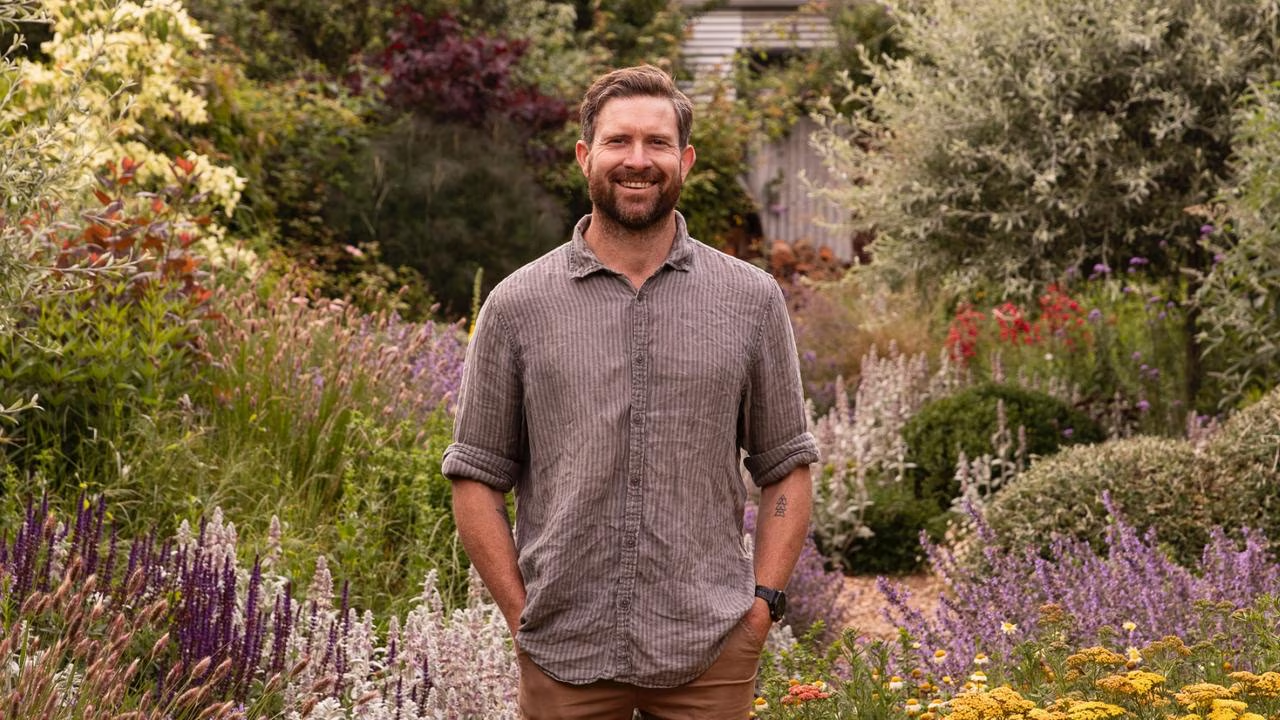
- S2E25: Tim Pilgrim on gardens, creativity and learning to work with what you can't control
- S2E24: Megan Dalla-Camina on creativity, truth and making space for what wants to come through
Listen or watch Creative Momentum with Meg
Want to be part of the Home Season?
I’m always looking for Australian creatives of all kinds to share their stories. If you’d like to be considered for a future interview, register your interest.
Looking for support with your own creative work?
Momentum is where writers and creatives come together to build consistent creative habits, find encouragement and keep moving their projects forward.