
What does your creative work need from you right now?
Sometimes the answer is focus. Sometimes it’s curiosity, space to wander, a change of scene or simply a proper break.
As creatives, we spend a lot of time paying attention to the work and to the world around us. But how often do we stop to pay attention to ourselves?
I’ve become much better at noticing when I need to stop writing. Not because I’ve become more disciplined. Quite possibly the opposite. I’ve become better at listening.
There’s a point I recognise now when staying at my desk isn’t helping. I start moving words around rather than actually improving anything. I become too close to the work to see it properly. I lose perspective. Everything feels harder than it should.
And sometimes I know that what I need isn’t another hour at the desk. I need to get up. Go outside. Read something. Look out the window. Sleep. Let my attention move somewhere else.
I’ve learned this through years of writing, editing and working with other writers, but I’ve also become increasingly interested in what is happening underneath it.
Why does stepping away sometimes help?
Why can an idea appear while we’re walking or showering or making dinner, when we weren’t consciously trying to solve anything?
And why, at other times, does taking a break simply mean that we needed a break?
The neuroscience is more interesting than the familiar idea that our brains simply ‘do their best work when we’re not working’.
Creative thinking appears to involve an interaction between systems associated with spontaneous, internally generated thought and systems involved in deliberate control and evaluation.
In other words, creativity isn’t simply about letting your mind wander, nor is it about concentrating as hard as possible. It involves both.
Which makes me wonder whether one of the creative skills we need to develop is not simply the ability to make the work, but the ability to notice what kind of attention the work needs from us.
Sometimes it needs focus.
Sometimes it needs distance.
Sometimes it needs recovery.
And sometimes it needs us to stop trying to make something and go and live.
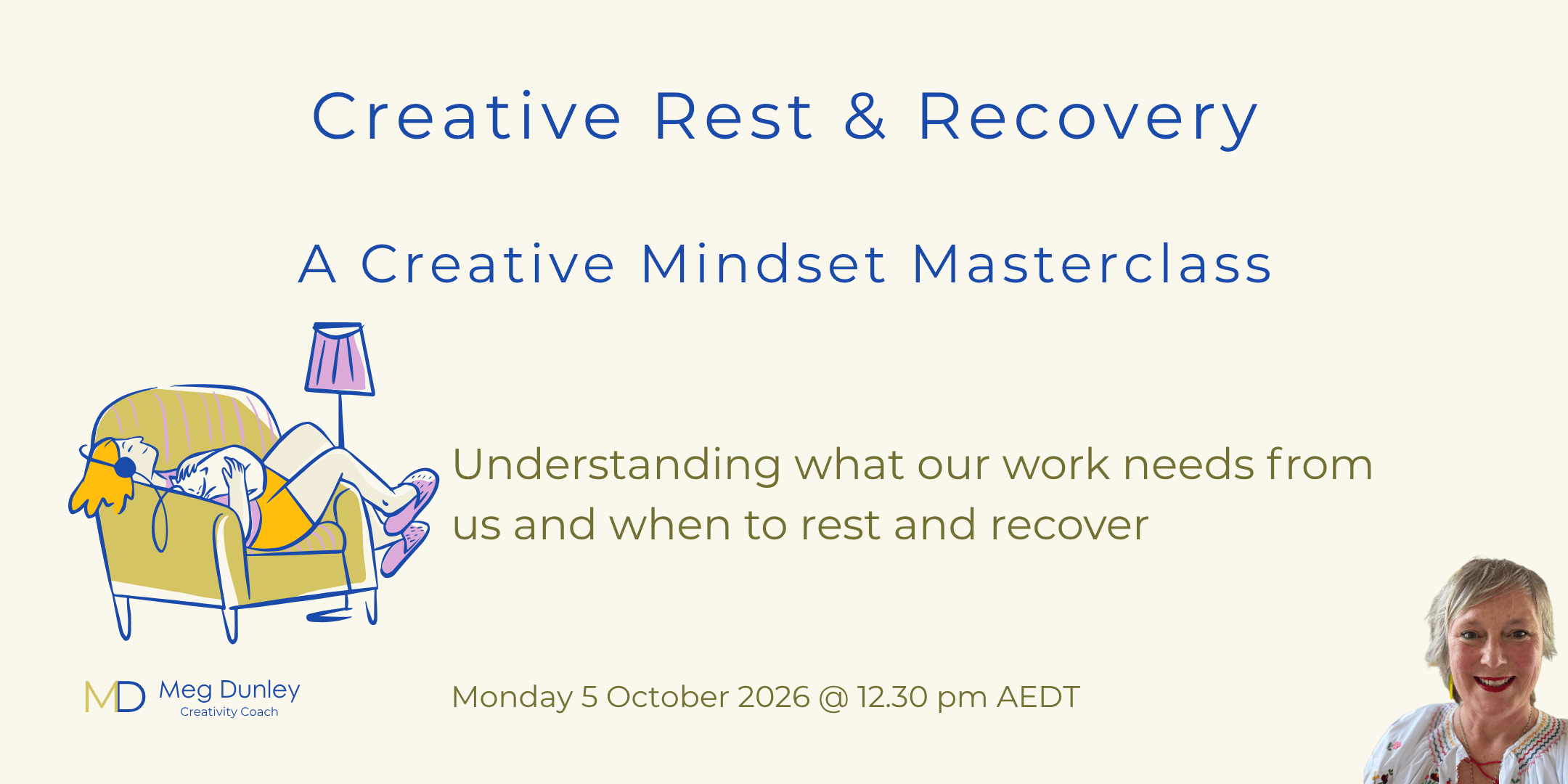
This is what I’ll be exploring in my October Creative Mindset Masterclass, Creative Recovery & Rest, on Monday 5 October. We’ll look at neuroscience, creative practice and our own experience. We’ll explore what happens when we give a creative problem some space, how to recognise when pushing through is useful and when it isn’t, and why creative work needs both concentration and distance. And we’ll spend a little time doing something that can feel surprisingly difficult: staring out the window. Not to get an idea. Not to become more productive. Not to turn rest into another task. Just to notice.
Because we spend a great deal of time telling writers to pay attention to the world. Perhaps we also need to learn how to pay attention to ourselves.
Creative Recovery & Rest | Creative Mindset Masterclass
Monday 5 October
12.30–1.30pm Melbourne time
Online via Zoom
Single session: $22 (incl. GST), including the live session and replay.
Or join via the Spark Pass for 12 months of monthly Creative Mindset Masterclasses (live & replay) and monthly newsletters.
What are Creative Mindset Masterclasses?
Creative Mindset Masterclasses are monthly interactive masterclasses to explore practical strategies for common creative challenges from overcoming self-doubt and comparison to building courage, setting boundaries, and maintaining momentum through life’s different seasons.
Each masterclass combines teaching, reflection exercises, and community discussion, with dedicated time for your questions. Whether you’re navigating a creative transition, struggling with burnout, or simply want to grow alongside others who understand the creative journey, these sessions offer both tools and connection.